Duolingo Read and Select Practice
Main DashboardLoading Exercises…
Meta Description: Master the DET “Read and Select” question (2026 Format). Try our free interactive exercise and learn the proven method to instantly identify real English words and avoid fake ones.
Introduction to Read and Select
The “Read and Select” question looks deceptively simple: you see a list of words, and you click on the real ones while ignoring the fake ones. Sounds easy, right?
Here’s the problem:
Your brain doesn’t want to cooperate. When you read quickly, fake words like “brillient” or “necesary” look real because your brain auto-corrects them. You’ve seen similar patterns thousands of times, so your mind fills in what it expects to see rather than what’s actually there. That split-second recognition reflex—the thing that makes you a fast reader—becomes your biggest liability on this question type.
This guide gives you a concrete method to override that automatic response. You’ll learn to spot fake words instantly, practice with real examples that mirror the DET’s difficulty, and understand exactly why certain patterns show up again and again in these questions. Let’s fix that auto-correct brain and turn this into one of your strongest sections.
2026 Update: The New Sequential Format
If you have practiced with older materials, you might be expecting a static grid of 15 words displayed all at once. However, the test has evolved.
In the updated Duolingo English Test format, words are often presented sequentially (one by one). You must make an immediate decision—Real or Fake—before the next word appears. This prevents test-takers from “scanning” the list to compare words against each other. While the underlying vocabulary database is the same, the pressure is higher because you cannot change your answer once you proceed to the next word.
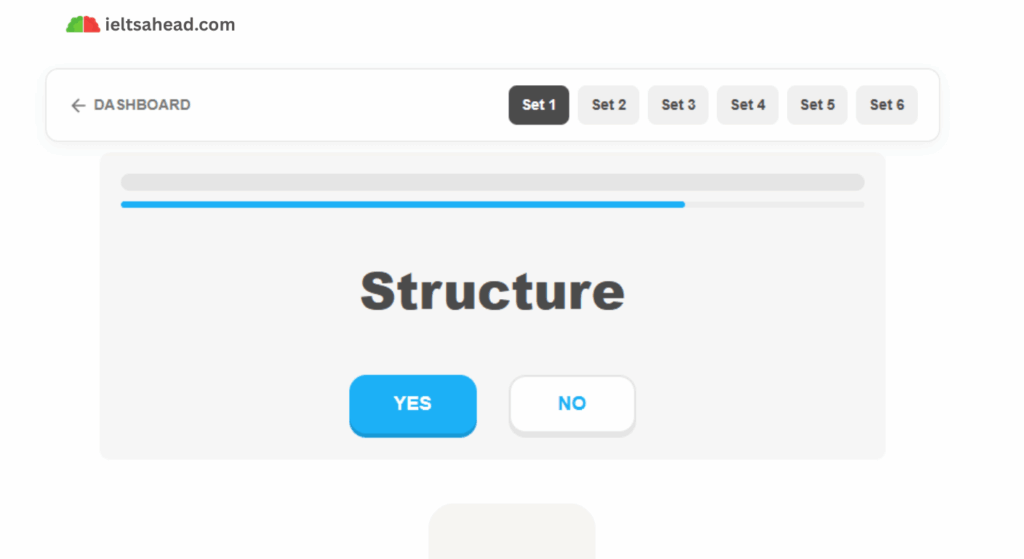
The modern interface requires quick, isolated decisions.
What is the “Read and Select” Question?
This question type tests your ability to distinguish between real English words and convincing imitations. Whether presented in a grid (older format) or a sequential list (new format), the task remains the same: validate existence.
The challenge isn’t recognizing words you use every day. It’s catching the sophisticated fakes that look almost identical to real words—off by just one letter or using a plausible-sounding combination that doesn’t actually exist in English.
Official Task Description and Rules
Here’s exactly what you’re working with:
- You must select every real word. Missing even one real word counts as an error.
- Do not select fake words. Every fake word you click also counts against you (Right minus Wrong scoring).
- There’s no word bank or context. Unlike “Read and Complete,” these words appear in isolation. You can’t use surrounding sentences to help you decide.
- Mandatory Selection. You cannot skip the question; you must make a judgment call.
The words range from common vocabulary to advanced academic terms, depending on how the adaptive algorithm is calibrating your level. You might see everyday words like “different” mixed with advanced terms like “eloquent,” and both might appear alongside fakes like “apparant” or “definately.” Time pressure matters here. You typically have very limited time per word.
Why This Question Type Matters in the Adaptive Test
The DET uses “Read and Select” as a key calibration tool for several reasons:
- It reveals your true vocabulary ceiling. You can’t fake your way through this with context clues or grammar logic. Either you recognize a word as real, or you don’t. The test quickly identifies where your vocabulary knowledge stops being automatic and starts becoming uncertain.
- It adapts rapidly based on your accuracy. Get several questions right, and suddenly you’re seeing words like “ephemeral” and “ubiquitous.” Miss a few, and the difficulty adjusts downward. This adaptive quality means your performance here directly influences your overall score trajectory.
- It tests spelling knowledge indirectly. While you’re not writing words, you’re using the same mental database that stores correct spellings. People who read extensively tend to excel here because they’ve internalized what English words “look like.”
- The scoring is unforgiving. Unlike speaking or writing tasks where there’s some subjectivity, this is binary: the word is either real or it isn’t. That makes it one of the few DET sections where you can objectively measure your improvement through practice.
Free Interactive “Read and Select” Practice
Time to put theory into practice. Below is a simulation of the cognitive load you will face. Imagine seeing this on your screen:
ANSWERS & EXPLANATIONS:
Why is “maintainance” fake? This is a classic trap. The verb is “maintain,” but the noun changes the vowel sound and spelling to maintenance. The test creates fakes by adding valid suffixes (like -ance) to valid roots without making the necessary spelling adjustments.
Other Common Traps in this Set:
- Occassion: Fake. (Correct: Occasion). The double ‘s’ is the trap.
- Definately: Fake. (Correct: Definitely). Phonetically correct, visually wrong.
- Apparant: Fake. (Correct: Apparent). Mismatched vowel at the end.
The Strategy: How to Identify Real English Words Quickly
You need a systematic approach, not just gut feeling. Here’s the method I teach that works under time pressure.
1. The Prefix/Suffix Check
English has predictable word-building patterns. Real words follow these patterns; fake words often violate them.
Common prefixes to recognize instantly: un-, re-, pre-, dis-, mis-, non-, over-, under-, sub-, super-. If you see “unbelieveable,” check if “un-” is attached properly to a real root. “Believeable” isn’t how we spell it—the real word is “unbelievable.” The fake gives itself away at the suffix.
Common suffixes that signal real words: -tion, -sion, -ment, -ness, -less, -ful, -able/-ible, -ous, -ive, -al, -ly, -ity. When you see these endings, verify they’re spelled correctly.
2. The Vowel Pattern Recognition
English has specific vowel combination rules. Learn these and you’ll catch fakes instantly.
- The “i before e” patterns: Generally “i before e except after c” (believe, receive). Exceptions: weird, either, neither, seize, leisure. When you see “wierd” or “recieve,” these violate the pattern.
- Double vowel combinations: Combinations like “ii”, “uu”, or “ae” (except in specific borrowed words) rarely appear. If you see “Occassion,” it has the right consonant doubling, but “occasion” is the real spelling with one ‘c.’ “Necesary” drops the double ‘s’ that “necessary” requires.
3. The “American Eye” Technique (Crucial for 2026)
Since the test prioritizes American spelling, you must actively filter out British variations which may be marked incorrect in the strict binary scoring system.
- -or vs -our: Choose Color, Honor, Flavor. Avoid Colour, Honour, Flavour.
- -ize vs -ise: Choose Realize, Organize. Avoid Realise, Organise.
- -er vs -re: Choose Center, Theater. Avoid Centre, Theatre.
4. The “Does It Sound Like a Word?” Gut Check
Here’s where your reading experience pays off. Real English words have rhythm and sound patterns. Fake words often feel slightly awkward when you pronounce them mentally.
Try saying “Apparant” vs. “Apparent”. Say both aloud mentally. “Apparent” has a smooth, familiar rhythm. “Apparant” feels clunky—your mouth doesn’t want to end that way. Trust that feeling.
The Process of Elimination for Tough Choices
When you’re genuinely unsure about a word, use elimination logic:
- Is this word above my vocabulary level? If you’re seeing “ephemeral” or “ubiquitous” and you’ve never encountered them before, don’t guess. Leave them unselected unless you can verify through the other strategies. It’s better to miss a real word you don’t know than to click a fake word.
- Have I seen this word misspelled commonly? Words like “definitely,” “separate,” “occasion,” “necessary,” and “maintenance” are among the most commonly misspelled words in English. The test knows this and uses them frequently as fakes.
- Risk calculation: Remember: selecting a fake hurts your score. Missing a real word also hurts, but being too aggressive (clicking everything that might be real) usually causes more damage than being slightly conservative.
Common Fake Word Patterns to Recognize
The DET doesn’t create random nonsense. The fake words follow specific patterns designed to trick English speakers. Learn these patterns and you’ll spot fakes much faster.
Type 1: Slightly Misspelled Common Words
This is the most frequent category. The test takes words you definitely know and alters them in predictable ways:
- Double consonants removed or added: Real: “recommend” → Fake: “reccommend” (extra ‘c’). Real: “necessary” → Fake: “necesary” (missing ‘s’).
- Vowels swapped: Real: “separate” → Fake: “seperate” (e instead of a). Real: “independent” → Fake: “independant” (a instead of e).
- Letters transposed: Real: “receive” → Fake: “recieve”. Real: “weird” → Fake: “wierd”.
Type 2: Made-Up Words with English-Like Sounds
These are the advanced-level fakes. They sound like they could be English words because they follow English phonetic patterns, but they don’t exist:
- “Brillient”: Sounds like brilliant + resilient, but isn’t real.
- “Apparant”: Sounds like it should mean obvious, following patterns like “flagrant,” but the real word is “apparent”.
- “Definately”: Sounds right phonetically, but “definitely” is the real spelling.
Read and Select Practice Questions & Answers
Ready to master this question type? The difference between struggling and excelling comes down to two things: recognizing common fake word patterns and having a systematic approach instead of relying on gut feeling alone. Practice these strategies on our sample questions above, and you’ll see your accuracy jump significantly. Your brain’s auto-correct feature won’t disappear, but now you have the tools to override it when it matters.
Ready to Score Higher?
Join thousands of students who’ve mastered the DET with expert guidance. Get personalized coaching, 2026-updated materials, and proven strategies.
✨ Join 5,000+ students • 4.9/5 rating • Get Your Desired Score