
DET for University Admission: Your Complete Guide to English Requirements
When I first started helping international students with university applications, one student told me she’d spent weeks preparing for the TOEFL before discovering her dream university accepted the Duolingo English Test. She could have saved time, money, and considerable stress. Over the years, I’ve watched the DET transform from a convenient alternative into a widely accepted standard for proving English proficiency. Today, understanding how universities evaluate DET scores across different academic levels isn’t just helpful—it’s essential for making smart application decisions.
The landscape of university admissions has shifted dramatically. What began as a handful of institutions accepting DET has grown into thousands of programs worldwide recognizing these scores. But here’s what many applicants miss: the score you need varies significantly depending on whether you’re applying for undergraduate studies, a master’s program, a PhD position, or competitive scholarship funding. Getting this wrong can delay your academic journey by an entire year or cost you substantial financial aid opportunities.
DET for Undergraduate Applications
Starting your university journey as an international undergraduate student brings its own unique set of challenges, and English proficiency requirements sit right at the center of this process. Most universities expect undergraduate applicants to demonstrate solid foundational English skills, though the specific numbers vary more than you might expect. For most undergraduate programs, admission committees typically look for DET scores between 100 and 120. State universities and regional institutions often set their minimum threshold around 95-105, recognizing that students will continue developing academic English throughout their undergraduate years. However, competitive universities—particularly those with strong international rankings—usually require scores of 115 or higher. I’ve seen highly selective liberal arts colleges request scores approaching 125, especially for programs heavy in writing and discussion.
The reality is that undergraduate admissions committees evaluate English proficiency differently than graduate programs do. They understand you’re younger, possibly just finishing secondary school, and haven’t yet developed specialized academic vocabulary. What they’re assessing is whether you can follow lectures, participate in class discussions, complete reading assignments, and write coherent essays. They’re not expecting research-level English sophistication yet. One pattern I’ve noticed repeatedly: universities with strong support systems for international students—comprehensive orientation programs, writing centers, ESL support—tend to accept slightly lower DET scores. They’ve built infrastructure to help students succeed even if their English needs refinement. Conversely, smaller institutions without these resources often maintain higher thresholds because they need students to arrive fully prepared. Program type matters significantly too. Engineering and computer science programs sometimes accept lower scores (around 100-105) because much of the coursework involves mathematics, coding, and technical work rather than extensive writing. Meanwhile, programs in humanities, social sciences, journalism, or business administration typically require higher scores (115-125) because success depends heavily on reading, writing, and verbal communication skills.
DET Score Requirements by Academic Level
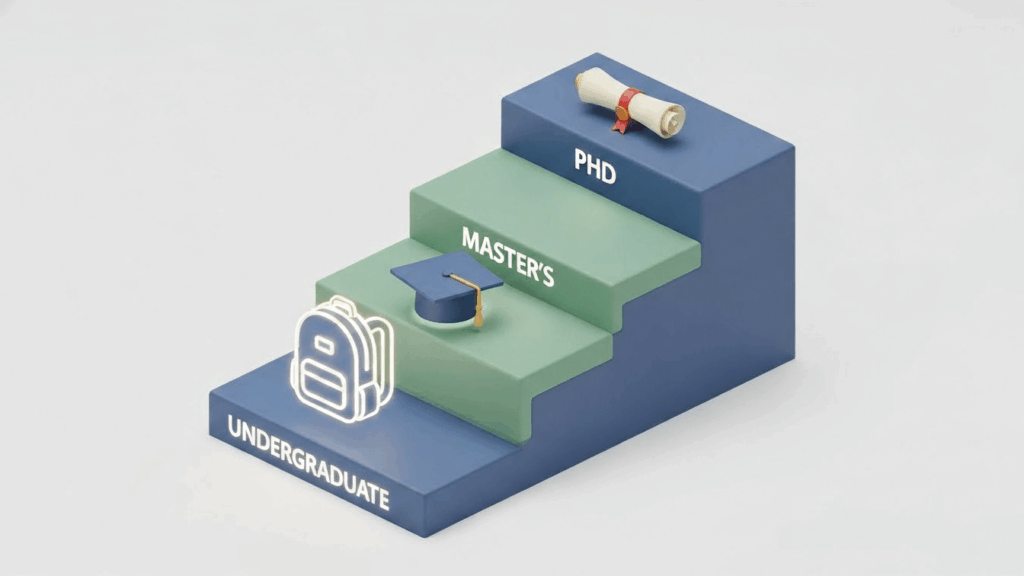
Understanding the score progression across academic levels helps you plan strategically. Undergraduate programs generally cluster in the 95-120 range, with community colleges and pathway programs sometimes accepting scores as low as 85-90. These preparatory programs explicitly design curricula to help international students strengthen their English while earning credits. Master’s programs represent a significant step up, typically requiring 105-125. The jump makes sense when you consider the academic expectations: graduate seminars demand active participation in complex discussions, research papers require sophisticated argumentation, and group projects necessitate clear professional communication. PhD programs push even higher, usually requiring 115-130, with some research-intensive programs seeking scores above 125.
But here’s something applicants often overlook: these ranges represent minimums, not competitive scores. If a university lists 105 as their requirement, that’s the absolute floor—the lowest score they’ll consider. To be genuinely competitive, especially for programs with limited international student seats, you typically need to score 10-15 points higher than the stated minimum. I always tell students: treat the published minimum as a warning sign, not a target. Different departments within the same university sometimes maintain different standards too. The engineering school might accept 100, while the education school requires 115, and the law school wants 125. Always verify requirements at the specific program level, not just the university level. This granular research can save you from disappointing surprises during the application process.
University-Specific DET Thresholds
Major universities have established clear DET policies, though navigating them requires careful attention. Top-tier research universities like those in the Russell Group (UK), Group of Eight (Australia), or U.S. News top 50 consistently maintain higher thresholds. You’re looking at minimum scores of 120-130 for competitive consideration, with many admitted students scoring considerably higher. Mid-tier regional universities offer more flexibility. They’ve often built their international recruitment strategies around accessible pathways, setting DET requirements around 95-110 for undergraduates and 105-115 for graduate programs. These institutions recognize that motivated students with slightly lower English scores can succeed with proper support systems in place.
Some universities operate on a tiered system that’s worth understanding. They might list a score of 105 for “regular admission” but accept students with scores of 95-104 into “conditional admission” programs. These conditional pathways typically require additional English courses during your first semester or year, but they get you into the university and earning credits while strengthening your language skills. For students who score just below the standard threshold, these programs represent valuable opportunities rather than setbacks. Geographic location influences requirements too, which surprised me when I first noticed the pattern. Universities in major metropolitan areas with diverse populations sometimes maintain slightly lower requirements than similar institutions in smaller communities. The logic seems to be that students in cities have more opportunities for English practice outside the classroom—international communities, cultural events, part-time work—that accelerate language development.
DET Preparation for Academic Writing

Academic writing represents the most significant challenge for many international students, and preparing through DET practice offers real benefits beyond just scoring well on the test. The DET writing samples directly assess skills you’ll use constantly in university: developing clear thesis statements, supporting arguments with evidence, organizing ideas logically, and adapting tone for academic audiences. When preparing your DET writing section, focus on structured paragraph development. Universities expect every paragraph to contain a clear topic sentence, supporting evidence or examples, analysis connecting evidence to your main point, and smooth transitions to the next idea. This formula appears in every essay you’ll write as a student. Practicing it for DET directly translates into stronger academic performance later.
Vocabulary development requires a balanced approach. Yes, universities want to see academic vocabulary, but they equally value clear, precise communication over unnecessarily complex language. I’ve reviewed countless student essays that suffered from “vocabulary showing off”—cramming in sophisticated words that didn’t quite fit the context. Admission committees recognize this immediately. Instead, focus on mastering transition words (however, furthermore, conversely), academic verbs (analyze, demonstrate, indicate), and field-specific terminology relevant to your intended major. The DET writing prompts actually simulate real university scenarios. When the test asks you to describe a graph, compare two viewpoints, or analyze a problem, you’re practicing exactly what you’ll do in coursework. Sociology students analyze data. Business students compare strategic approaches. Engineering students describe technical processes. Use DET preparation to develop these transferable skills, not just memorize templates. Time management matters enormously. The DET gives you limited time for writing tasks, which mirrors university reality—timed exams, deadline pressure, quick response papers. Practice writing structured paragraphs in five minutes. Work on developing complete ideas in short timeframes. These skills translate directly into exam success and managing heavy coursework loads later.
Achieve the Score ThatGets You Admitted
- ✓ Master the academic English skills universities want
- ✓ Practice with mock tests that mirror the real exam
- ✓ Get personalized feedback to boost your score
Start your journey with a free practice test!
DET for Graduate School Admission
Graduate admissions function fundamentally differently than undergraduate processes, and your DET score plays a more sophisticated role in the evaluation. Master’s programs admit students who should already possess strong academic English skills, capable of immediately engaging with graduate-level coursework, scholarly literature, and professional communication. The assumption is that you won’t need language development—you need to hit the ground running. Most master’s programs set DET minimums between 105 and 120, with highly competitive programs requiring 115-125 or higher. But unlike undergraduate admissions, graduate committees place your English score in a holistic context. They’re evaluating it alongside your undergraduate GPA, research experience, letters of recommendation, statement of purpose, and sometimes GRE/GMAT scores. A strong research background or impressive work experience can sometimes offset a DET score that’s just below the program’s preferred range—though you should never count on this exception.
Professional master’s programs (MBA, MPH, MSW, MEd) often maintain distinct requirements from research-focused programs. Professional programs emphasize group work, presentations, case studies, and networking events, so they evaluate whether you can communicate effectively in professional settings. Research programs care more about reading complex literature, writing literature reviews, and articulating research ideas clearly. This distinction sometimes affects score requirements by 5-10 points. The statement of purpose becomes particularly important at the graduate level, and it’s where your English skills receive direct evaluation beyond your DET score. Admission committees read these statements carefully, assessing not just your research interests and qualifications but also your ability to articulate complex ideas clearly. I’ve seen situations where excellent DET scores paired with poorly written statements raised red flags, and occasionally where slightly lower scores paired with brilliant statements led to admission offers. The consistency between your DET score and your actual demonstrated writing ability matters significantly.
Statement of Purpose Language Skills
Your statement of purpose represents the highest-stakes writing you’ll do in the application process, and it must reflect English proficiency consistent with your DET score. Admission committees have read thousands of these statements—they immediately recognize generic language, awkward phrasing, or text that doesn’t sound genuinely authored by the applicant. If you score 120 on DET but your statement reads at a 90 level, committees notice this discrepancy. Authenticity matters more than perfection. Don’t try to sound like a native speaker if you’re not one. Instead, focus on clarity, logical organization, and genuine voice. Admission committees value authentic personal narratives over overly polished, generic statements. Share specific experiences that shaped your academic interests, explain clearly why particular programs fit your goals, and articulate your research interests with appropriate vocabulary for your field.
Academic tone in statements requires balance. You need formal, professional language without sounding stiff or impersonal. Use first person confidently (“I developed interest in environmental policy through…”), employ active voice predominantly, and vary sentence structure between complex analytical sentences and shorter, impactful ones. Avoid casual phrases (“I’m really excited about…”) and overly casual contractions, but don’t swing too far toward unnecessarily complex constructions. Field-specific vocabulary matters enormously. If you’re applying to chemistry programs, your statement should naturally incorporate terms like synthesis methods, analytical techniques, or research methodologies relevant to your interests. Computer science applicants should discuss algorithms, frameworks, or specific programming approaches. This specialized vocabulary demonstrates genuine engagement with your field and provides concrete evidence of your readiness for graduate study. However, avoid jargon for jargon’s sake—use technical terms only when they communicate your ideas more precisely. Committees also evaluate whether your English proficiency suits their program’s specific demands. PhD programs want evidence you can read and comprehend dense academic texts, so your statement might reference specific scholars whose work influences your thinking. Professional programs value communication skills, so your statement might emphasize collaborative experiences or presentation achievements. Tailor your language to demonstrate the specific skills your program requires.
Academic Vocabulary for Different Fields
Graduate programs in different disciplines maintain different language expectations, and understanding these nuances helps you prepare more effectively for both DET and your actual studies. STEM fields (Science, Technology, Engineering, Mathematics) typically require strong technical vocabulary but accept more straightforward sentence structures. You need to know terms like “methodology,” “variables,” “statistical significance,” and field-specific terminology, but elaborate prose isn’t the priority—precision and clarity are. Social sciences (sociology, psychology, political science, economics) demand more sophisticated argumentative language. You’ll encounter terms like “theoretical framework,” “qualitative analysis,” “empirical evidence,” and “sociological constructs.” These fields value your ability to discuss abstract concepts, analyze complex social phenomena, and engage with competing theoretical perspectives. Your DET preparation should include reading social science articles and practicing summarizing arguments.
Humanities programs (literature, history, philosophy) expect the highest level of written sophistication. You need vocabulary for literary analysis (“narrative structure,” “thematic elements”), historical discussion (“historiography,” “primary sources”), and philosophical argumentation (“epistemological questions,” “normative claims”). These fields care deeply about nuanced expression, so varied vocabulary and complex sentence structures become more important. Business and professional programs sit somewhere in the middle. They want clear, professional communication using terms like “strategic planning,” “market analysis,” “organizational behavior,” and “financial modeling.” The emphasis is on practical communication—presenting information clearly, writing professional reports, and participating effectively in business discussions. Avoid overly academic language in favor of direct, results-oriented communication. For DET preparation, expose yourself to academic content in your field. Read journal abstracts, follow field-specific blogs or podcasts, review university course descriptions. This exposure builds your comfort with disciplinary vocabulary naturally, so when these terms appear in DET reading passages or you need them for writing responses, they flow naturally rather than sounding forced or inappropriate.
DET for PhD Program Applications
PhD admissions represent the most selective academic gatekeeping you’ll encounter, and English requirements reflect this reality. Doctoral programs aren’t just accepting students—they’re recruiting future scholars who will contribute original research to their fields. Your English proficiency must support reading hundreds of scholarly articles, writing a dissertation, presenting at conferences, teaching undergraduate students, and collaborating with international research communities. Most PhD programs require DET scores of 115-130, with top research universities and highly competitive programs often expecting 120 or higher. Some programs, particularly in humanities and social sciences, list minimums of 125. These aren’t arbitrary numbers. PhD coursework involves reading dense theoretical texts, engaging in advanced seminars, and producing publication-quality writing. The language demands far exceed master’s programs.
However, PhD admissions evaluate English proficiency within a larger research profile. Your publication record, research experience, letters from scholars in your field, writing samples, and research proposal all matter significantly. A student with strong research credentials and DET score of 115 might receive consideration even if the stated minimum is 120, particularly if their writing sample demonstrates sophisticated academic writing. Conversely, a DET score of 130 won’t compensate for weak research qualifications. The research proposal receives enormous scrutiny, and it’s where language proficiency meets academic preparation most directly. Committees assess whether you can articulate research questions clearly, engage with existing literature appropriately, propose methodologically sound approaches, and write with the precision expected of emerging scholars. This document must demonstrate that your English skills won’t impede your research productivity.
DET for Research Program Applications
Research-intensive programs—whether master’s theses, doctoral studies, or competitive research scholarships—evaluate English through a research lens. They’re asking: Can this student read and comprehend scholarly literature? Can they articulate research questions precisely? Can they write manuscripts that contribute to knowledge in our field? Your DET score provides initial evidence, but your research-related materials complete the picture. Understanding research communication demands helps contextualize score requirements. You’ll spend years reading journal articles written in sophisticated academic English, often featuring complex sentence structures, specialized terminology, and nuanced arguments. You’ll attend seminars where scholars debate theoretical approaches using discipline-specific language. You’ll write papers that undergo peer review, requiring precision and clarity. PhD programs set high DET minimums because language barriers at this level significantly impede research progress.
Different research methodologies create different language demands. Quantitative research—involving statistics, data analysis, experimental design—requires precision in describing methods and results but often uses relatively standardized language. You need to master terms like “significance level,” “correlation,” “independent variables,” but the writing follows established conventions. Qualitative research—involving interviews, ethnography, textual analysis—demands more sophisticated language for describing complex social phenomena, interpreting meaning, and building theoretical arguments. Laboratory sciences have their own language considerations. You’ll read methods sections describing experimental procedures, results sections presenting data, and discussion sections interpreting findings within theoretical contexts. While lab work itself may require less language proficiency, publishing research—which every PhD student must do—requires strong academic writing. International students sometimes underestimate this aspect of science PhDs. Research proposals for PhD applications deserve special attention. These documents must convince committees you can design significant research projects. The language needs to be precise (clearly defined concepts), current (engaging recent literature), and sophisticated (demonstrating theoretical understanding). Proposals that sound vague, use incorrect terminology, or fail to engage appropriately with existing scholarship raise concerns about whether your English proficiency supports research success.
DET for Scholarship Applications

Scholarship applications add another layer of complexity to English requirements, and understanding how funding committees evaluate language proficiency can significantly impact your financial aid success. Here’s something that surprises many students: scholarship committees often hold higher language expectations than admission committees, even when they’re at the same institution. The logic is straightforward—scholarships represent significant financial investments, and committees want confidence that recipients will succeed academically and represent the program well. Merit-based scholarships frequently require DET scores 5-10 points higher than admission minimums. If a master’s program admits students with scores of 105, competitive scholarships might require 115. Full-ride PhD scholarships often expect scores of 120-130, regardless of the program’s admission minimum. This gap reflects increased selectivity—scholarship committees choose among already-admitted students, so they can maintain higher standards.
Teaching assistantships present unique language requirements because you’ll instruct undergraduate students who are often native English speakers. Universities take this responsibility seriously, particularly after past experiences with international teaching assistants whose language barriers frustrated students. TA positions typically require DET scores of 115-120 minimum, with some institutions requiring supplementary speaking assessments. If you’re counting on TA funding, don’t assume meeting admission requirements guarantees teaching eligibility. Research assistantships emphasize different skills. These positions value your ability to understand complex research directions, read scholarly literature, and contribute to research projects. Scores of 105-115 might suffice, especially in STEM fields where much communication involves technical discussions, data analysis, and laboratory work rather than teaching or extensive writing. However, if the RA position involves writing grant proposals or manuscripts, expectations increase significantly.
DET for Competitive Scholarships
Highly competitive scholarships—Fulbright, Commonwealth Scholarships, country-specific merit awards, or prestigious university fellowships—maintain the highest language standards. These scholarships often fund not just tuition but living expenses, travel, research costs, and professional development for multiple years. Selection committees choose among exceptional applicants worldwide, and English proficiency becomes a differentiating factor when other qualifications are similarly strong. For these competitive scholarships, think of DET scores of 120 as baseline expectations, with successful applicants often scoring 125-135. The scholarship essay or research proposal receives intense scrutiny, and it must demonstrate writing abilities that match or exceed your DET score. Committees want evidence that you’ll represent their program effectively at conferences, publish research successfully, and engage meaningfully with academic communities.
One critical factor many students overlook: scholarship committees often include accomplished scholars who read academic writing professionally. They immediately recognize whether your application materials demonstrate genuine advanced English proficiency or whether someone else heavily edited your work. Discrepancies between your DET speaking/writing scores and your submitted essays raise immediate concerns. Authenticity matters enormously in this context. External scholarships (funded by governments, foundations, or corporations) sometimes maintain standardized English requirements across all fields and countries. A Commonwealth Scholarship might require IELTS 7.0 equivalent (roughly DET 120-125) whether you’re studying engineering or literature. These rigid requirements leave little room for exceptions, so meeting the threshold becomes non-negotiable for application eligibility. Strategic timing matters for scholarship applications. Many deadlines fall months before university admission deadlines, meaning you need your DET scores ready earlier. Missing scholarship deadlines because you’re still achieving required scores is financially costly. I always advise students targeting scholarships to take DET earlier in their application timeline, allowing time for retakes if necessary before scholarship deadlines pass.
Scholarship Application Timing and Scores
The timeline for scholarship applications creates pressure that students often underestimate. Many competitive scholarships have deadlines 6-12 months before program start dates. If you’re planning to begin studies in September 2026, some scholarship deadlines fall in late 2025 or even earlier. This means you need qualifying DET scores much earlier than admission-only applicants, and you can’t afford to delay testing while hoping your English improves naturally over time. Score improvement strategies require realistic planning. Most students improve their DET scores by 10-20 points through focused preparation, but this typically requires 2-3 months of consistent study. If you’re scoring 95 and need 115 for a scholarship, that’s achievable but requires dedicated preparation time. If you’re scoring 90 and need 125, you’re looking at potentially 4-6 months of intensive work. Starting early gives you flexibility for retakes and removes the stress of last-minute testing.
Multiple scholarship applications often mean juggling different requirements. You might apply for three scholarships with minimums of 115, 120, and 125 respectively. The strategic approach is clear: prepare for the highest requirement. If you achieve 125, you’re automatically eligible for all three. But if you only reach 115, you’ve eliminated two opportunities. This reality pushes students toward more intensive preparation targeting the highest threshold they might encounter. Retake strategies deserve careful consideration. The DET allows retakes after 5 days, but each attempt costs money. More importantly, inconsistent scores can create questions. If you score 120, then 105, then 125, committees might wonder which score reflects your actual abilities. The stress of scholarship deadlines sometimes pushes students to take tests before they’re ready, resulting in lower scores that become part of their record. Test when you’re genuinely prepared, not just when deadlines approach. Some scholarships offer “conditional awards” based on achieving specific scores by certain dates. These can be valuable safety nets—you receive a scholarship offer contingent on submitting a DET score of 115 by a specific date. This removes some pressure by confirming funding before you’ve achieved the required score, but it also creates hard deadlines with significant financial consequences for missing them.
Frequently Asked Questions
What DET score do I need for master’s programs?
Most master’s programs require DET scores between 105 and 120, though this varies significantly by institution and field. Competitive universities in the US, UK, Canada, and Australia typically set minimums around 110-115, while regional universities might accept 100-105. Professional programs like MBAs often require 110-120 because of their emphasis on communication and group work. Research-focused master’s programs sometimes maintain slightly higher requirements (115-120) since you’ll be reading complex scholarly literature and writing a thesis. Always check your specific program’s requirements, not just university-wide policies, because departments maintain their own standards. If you’re targeting scholarships alongside admission, aim for scores 5-10 points higher than the stated minimum to be genuinely competitive.
Is DET accepted for PhD applications?
Yes, thousands of PhD programs worldwide now accept DET for English proficiency verification. However, requirements are typically higher than for master’s programs, usually ranging from 115-130, with top research universities often expecting 120 or higher. PhD admissions committees evaluate DET scores alongside your research profile—publications, conference presentations, research experience, and letters from scholars in your field. A strong research record can sometimes offset scores just below stated minimums, though this varies by program. Importantly, some PhD funding packages, particularly teaching assistantships, maintain separate language requirements beyond admission standards. Before investing heavily in a DET preparation strategy, verify that your target programs explicitly accept DET rather than requiring TOEFL or IELTS specifically.
How important is my DET score for scholarship applications?
Your DET score becomes critically important for scholarship applications, often more so than for admission itself. Many scholarship committees use English proficiency as an initial screening criterion, automatically eliminating applicants below certain thresholds before reviewing other materials. Merit-based scholarships typically require scores 5-15 points higher than admission minimums because committees select among already-qualified applicants. Teaching assistantships often maintain the highest language requirements since you’ll be instructing native English speakers. For highly competitive international scholarships like Fulbright or Commonwealth, DET scores around 120-130 represent baseline expectations rather than competitive achievements. The scholarship essay receives intense scrutiny too, and committees expect writing quality that matches your DET score. If there’s significant discrepancy—you scored 130 on DET but your essay reads at a much lower level—committees notice this inconsistency.
Should I retake the DET for a better scholarship chance?
This depends on your current score, target scholarship requirements, and application timeline. If you’re within 5-10 points of scholarship thresholds and have time for focused preparation (2-3 months), retaking often makes financial sense. The DET costs significantly less than a semester’s tuition, so investing in score improvement can yield substantial financial returns through better scholarship opportunities. However, consider your score improvement potential realistically. Most students improve 10-20 points with dedicated preparation, but jumping from 95 to 125 requires intensive, sustained work that not everyone can accomplish quickly. Retaking makes less sense if you’re already above scholarship minimums—a score of 120 versus 125 rarely makes a difference when other application materials are strong. Focus preparation on areas where DET reflects genuine skill gaps rather than just test-taking weaknesses. If your current score seems inconsistent with your actual English abilities, retaking definitely makes sense.
Conclusion
Navigating DET requirements across different academic levels and application types initially feels overwhelming, but understanding these expectations allows you to plan strategically rather than reactively. The key insight is that DET scores exist within larger application contexts—they open doors, but they’re evaluated alongside your academic achievements, research experience, and demonstrated potential. A score that seems barely adequate for admission might prove insufficient for the competitive scholarship that makes attendance financially feasible. Start your testing timeline early, particularly if you’re targeting scholarships with earlier deadlines. Use DET preparation as an opportunity to build genuine academic English skills you’ll need throughout your studies, not just memorize test strategies. Focus on developing strong academic writing, expanding field-specific vocabulary, and practicing the kind of reading and analysis you’ll do constantly as a graduate student. These investments pay dividends far beyond your test score.
Remember that universities admit students, not test scores. Your DET results must meet minimums, yes, but admission committees ultimately evaluate whether you’ll succeed in their specific program and contribute meaningfully to their academic community. A slightly lower score paired with exceptional research credentials often succeeds over higher scores without compelling academic narratives. Approach your DET preparation seriously, achieve the thresholds you need, but maintain perspective about where English proficiency fits in your broader academic profile. Your journey toward international education represents courage, ambition, and commitment to personal growth. English proficiency requirements might feel like barriers now, but they’re actually investments in your academic success. Every point you earn on the DET reflects real skills you’ll use in seminars, research, and professional development. Prepare thoroughly, test strategically, and move forward confidently toward the academic opportunities you’ve worked so hard to pursue. Your future university is waiting for students exactly like you—prepared, determined, and ready to contribute to their academic community.
Ready to Start Your Academic Journey?
You have the academic potential. We have the English preparation you need to meet university and scholarship requirements. Get started with our specialized courses today.
View University Prep Courses