DET Study Plan: Complete Preparation Guide for Every Timeline

A structured study plan transforms random practice into strategic preparation that consistently produces higher DET scores. Students who follow organized schedules outperform those studying sporadically, even when total study hours remain equal. The difference lies in systematic skill development, proper pacing, and strategic practice distribution across all test components.
Random preparation creates gaps in skill coverage. Students naturally gravitate toward comfortable areas while avoiding challenging sections. A structured plan forces balanced attention across reading, writing, listening, and speaking components. This comprehensive approach prevents weak areas from limiting overall scores. Effective study plans also prevent burnout through reasonable daily commitments and strategic rest periods. Cramming creates short-term fatigue and long-term retention problems. Distributed practice over weeks builds durable skills that perform under test pressure. The brain consolidates learning during rest periods, making recovery time essential rather than optional. Study plans provide measurable progress markers that maintain motivation throughout preparation. Clear daily goals create small wins that build confidence. Regular mock tests quantify improvement, validating that invested time produces results. This feedback loop keeps students engaged even when progress feels slow. The following sections present detailed study plans for different timelines and circumstances. Whether preparing intensively over one week or steadily across a month, these structured approaches maximize efficiency. Working professionals receive specialized schedules accommodating career demands. Last-minute test takers get focused strategies for limited timeframes. Each plan includes specific daily activities, time allocations, and progress checkpoints ensuring comprehensive preparation for DET success.
Turn Your Plan IntoYour Target Score
- ✓ Guided lessons to master every question type
- ✓ Full mock tests to track your progress accurately
- ✓ Expert feedback to turn weaknesses into strengths
Execute your plan with expert support!
7-Day DET Intensive Study Plan
Intensive one-week preparation requires total commitment and strategic focus on high-impact activities. This compressed timeline demands 4-6 hours of daily study plus additional time for meals and rest. Students should clear schedules as much as possible, treating preparation like a full-time intensive course.

Day 1: Assessment and Foundation
Begin with a complete diagnostic practice test to establish baseline scores and identify weak areas. Allocate three hours for the full practice exam under realistic conditions. No interruptions, proper timing, and quiet environment mirror actual test conditions. Spend two hours analyzing results after completing the diagnostic. Review every incorrect answer and identify patterns in mistakes. Note which question types cause consistent problems. Determine whether errors stem from comprehension issues, time pressure, or unfamiliarity with formats. Use the remaining hour to familiarize with all DET question types. The test includes unique formats like “Read Then Write,” “Listen Then Speak,” and “Complete the Sentences.” Understanding what each question type demands prevents confusion during actual testing.
Day 2: Speaking and Listening Focus
Dedicate this day to oral skills since speaking often receives insufficient attention during preparation. Spend two hours on speaking practice across different question types. Record responses and listen critically for clarity, pronunciation, and fluency issues. Practice “Read and Select” questions for 45 minutes, improving pronunciation and reading fluency simultaneously. This question type requires reading sentences aloud, building comfort with spontaneous speaking. Allocate 90 minutes to “Speak About the Photo” and “Read Then Speak” formats. These require describing images and responding to written prompts verbally. Practice organizing thoughts quickly since preparation time is minimal. Use two hours for intensive listening practice. Focus on “Listen and Type” questions requiring exact transcription of spoken sentences. This builds attention to pronunciation details and English sound patterns. Complete the day with one hour of video interview practice. Record yourself answering typical DET interview prompts for 1-3 minutes. Evaluate body language, speaking pace, and content organization.
Day 3: Reading and Writing Development
Reading comprehension forms the foundation for multiple question types. Spend 90 minutes on “Read and Complete” exercises where missing words must be filled in passages. This builds vocabulary recognition and grammatical intuition. Practice “Read and Select” for one hour, identifying real English words among nonsense options. This improves vocabulary breadth and word recognition speed under pressure. Allocate two hours to writing practice. Complete multiple “Write About the Photo” responses in exactly five minutes each. This time pressure simulation builds skills for rapid writing organization. Practice integrated tasks combining reading and writing for 90 minutes. These questions require reading passages then writing responses connecting to the content. Focus on clear organization and relevant examples. End with 30 minutes reviewing common grammar patterns and vocabulary themes appearing frequently in DET questions.
Day 4: Integrated Skills and Weak Areas
Focus on question types integrating multiple skills. Spend two hours on “Read Then Write” tasks requiring reading passages and composing written responses. These questions test comprehension and written expression simultaneously. Practice “Listen Then Speak” for 90 minutes. These questions play audio clips then require verbal responses. The integration challenges students to process information quickly and formulate coherent spoken answers. Dedicate two hours specifically to weak areas identified in the Day 1 diagnostic. If listening caused problems, do additional listening exercises. If writing scored low, complete extra writing prompts with careful self-editing. Use one remaining hour for vocabulary building focused on academic and common topics. Create flashcards or use spaced repetition systems for efficient memorization.
Day 5: Full-Length Practice Test
Take a complete second practice test under strictly timed conditions. This three-hour session provides crucial data about progress and remaining gaps. Avoid consulting resources during testing—simulate actual exam pressure. Spend two hours analyzing performance. Compare results to the Day 1 diagnostic to measure improvement. Identify any persistent weak areas needing final-day attention. Review the video interview portion critically. Watch recorded responses and note areas for improvement in delivery, content, and organization. Use remaining time researching any question types or concepts that still feel unclear. Watch explanation videos or read guides about specific challenging formats.
Day 6: Targeted Review and Refinement
Focus exclusively on question types showing minimal improvement between diagnostic and second practice test. If speaking remains weak, dedicate four hours to intensive speaking practice with varied prompts. Spend two hours on speed drills. Practice answering question types quickly while maintaining accuracy. The adaptive format requires efficient pacing—slow responses on easy questions waste time needed for harder items. Complete one hour of pronunciation practice if speaking revealed clarity issues. Record yourself reading passages aloud, comparing pronunciation to native speaker models. Use two hours for vocabulary reinforcement, focusing on words frequently appearing in practice materials but not yet fully mastered. End the day early to ensure adequate rest before the final preparation day.
Day 7: Final Preparation and Mental Readiness
Avoid heavy studying on test eve. Complete one hour of light review covering key vocabulary and question type reminders. Mental freshness matters more than cramming additional information. Spend 30 minutes on a final speaking practice session, recording responses to build confidence. Keep the session positive—focus on noting what you do well rather than obsessing over mistakes. Use one hour reviewing test logistics: checking technical requirements, confirming test time, preparing ID, and setting up the testing space. Eliminate potential technical issues before test day. Practice relaxation techniques for 30 minutes. Deep breathing exercises and positive visualization reduce test anxiety that can undermine performance. Go to bed early ensuring 7-8 hours of sleep before the test. Cognitive performance depends heavily on adequate rest—tired brains cannot access learned information efficiently.
Daily DET Practice Routine
Effective daily routines rotate through skill areas while maintaining focus on high-value activities. Even within intensive schedules, structure each day to include diverse practice preventing mental fatigue from repetitive tasks.
Morning Study Block (2-3 hours)
Begin each day with listening and reading practice when mental energy peaks. These receptive skills benefit from fresh concentration. Alternate between intensive focused practice and lighter exposure activities. Spend 45-60 minutes on concentrated listening exercises. Complete multiple “Listen and Type” questions requiring exact transcription. This intense focus builds auditory discrimination skills essential for understanding accents and pronunciation variations. Follow with 45-60 minutes of reading comprehension practice. Complete passages with missing words, select real words from lists, and answer questions about short texts. Vary difficulty levels throughout the week as skills improve. Use the remaining 30-45 minutes for vocabulary review and expansion. Study word lists, complete vocabulary exercises, or read English articles noting unfamiliar terms.
Midday Study Block (1-2 hours)
Focus on productive skills during midday sessions. Speaking and writing require energy for active language production. Schedule these practices when afternoon energy dips but before significant fatigue sets in. Dedicate 45-60 minutes to speaking practice. Record responses to photo description prompts, interview questions, and read-then-speak tasks. Listen to recordings immediately, noting areas for improvement. Use 30-45 minutes for writing practice. Complete timed writing prompts mimicking test conditions. Write about photos in exactly five minutes. Compose longer responses to reading passages in 10-15 minutes. End the session with 15 minutes of self-evaluation. Review written work and recorded speech, identifying specific improvements for subsequent practice.
Evening Study Block (1-2 hours)
Evening sessions work well for integrated practice and review activities. Energy may be lower but these activities require less intense concentration than morning skill-building. Spend 60-90 minutes on integrated question types combining multiple skills. Practice read-then-write and listen-then-speak formats that mirror real test integration. Use remaining time reviewing the day’s practice. Analyze mistakes, note challenging question types, and identify patterns in errors. This reflection consolidates learning and guides subsequent study focus. End each day with 15 minutes of light English exposure: watching short videos, reading articles, or listening to podcasts. This relaxed engagement maintains language immersion without creating additional study pressure.
DET Skill-Building Schedule
Systematic skill development requires dedicated time for each test component with progressive difficulty increases throughout the preparation period.

Reading Skills Development
Begin with fundamental vocabulary recognition. Early practice should emphasize identifying real English words quickly, building the mental lexicon accessed during test pressure. Spend 20-30 minutes daily on vocabulary-focused exercises during the first three days. Progress to sentence completion tasks requiring grammatical understanding and context clues. These exercises build skills for completing passages with missing words. Allocate 30-45 minutes daily starting Day 2, increasing difficulty as proficiency improves. Advance to full passage comprehension by Day 4. Practice reading short academic texts and answering questions. Focus on understanding main ideas, identifying supporting details, and making inferences. Dedicate 45-60 minutes to this higher-level reading practice.
Listening Skills Progression
Start with sentence-level listening practice. “Listen and Type” questions requiring exact transcription build foundational auditory discrimination. Practice 30-45 minutes daily throughout the week, gradually increasing audio speed and accent variety. Add question-answer listening by Day 3. Practice hearing questions and formulating appropriate responses. This conversational listening differs from transcription, requiring comprehension of meaning rather than exact words. Incorporate longer audio passages by Day 5. Listen to extended content then answer questions about main ideas and details. This advanced practice simulates video interview listening and integrated listening-speaking tasks.
Speaking Skills Development
Begin with reading aloud to build pronunciation confidence. Spend 20-30 minutes daily reading passages aloud, focusing on clear enunciation and natural pacing. Record sessions to monitor progress. Add spontaneous description by Day 2. Practice describing photos with minimal preparation time. Start allowing 30 seconds of planning, then reduce to 15 seconds to simulate test conditions. Dedicate 30-45 minutes daily to this crucial skill. Incorporate opinion responses by Day 4. Practice answering questions requiring personal viewpoints and experiences. These longer responses demand organization and development of ideas. Allocate 45 minutes to practicing 1-3 minute speaking samples.
Writing Skills Advancement
Focus initially on sentence-level writing accuracy. Practice grammar exercises and sentence construction. Spend 20-30 minutes daily ensuring strong grammatical foundations during Days 1-3. Progress to paragraph writing by Day 3. Practice organizing ideas into coherent paragraphs with clear topic sentences and supporting details. Complete 2-3 paragraph writing exercises daily, each taking 10-15 minutes. Advance to timed essay practice by Day 5. Complete full writing prompts under strict time limits. Practice both short five-minute photo descriptions and longer passage-based responses. Allocate 60 minutes daily to timed writing practice.
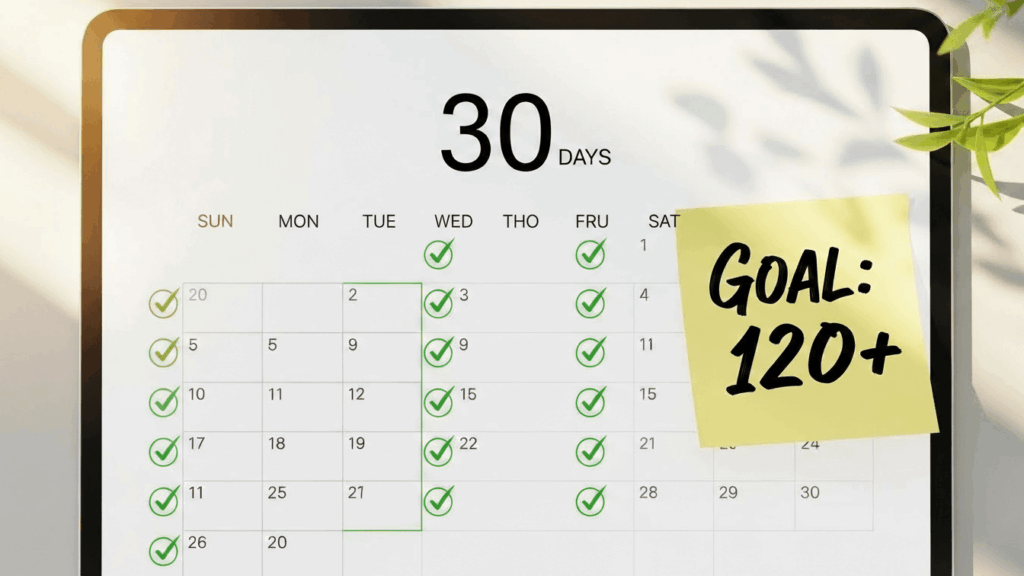
30-Day DET Preparation Schedule
Extended preparation allows deeper skill development and sustainable study habits avoiding burnout. A 30-day schedule typically requires 1-3 hours of daily study depending on starting proficiency and target scores.
Week 1: Foundation and Assessment (Days 1-7)
Days 1-2: Diagnostic Testing and Analysis
Complete a full-length practice test on Day 1. Take three hours for the complete exam under test conditions. This baseline measurement identifies current strengths and weaknesses guiding the month’s study focus. Spend Day 2 thoroughly analyzing results. Review every question type’s performance. Create a detailed assessment noting which skills need most attention. Calculate approximate subscores for literacy, conversation, comprehension, and production. Research DET question formats during remaining Day 2 time. Understand exactly what each question type requires and how adaptive algorithms adjust difficulty.
Days 3-5: Reading and Vocabulary Foundation
Dedicate these days to building reading skills and vocabulary essential for multiple question types. Spend 60-90 minutes daily on reading practice including passage completion, word recognition, and comprehension questions. Allocate 30-45 minutes daily to systematic vocabulary study. Learn 20-30 new words each day using flashcards or spaced repetition software. Focus on academic vocabulary and high-frequency words appearing in DET practice materials. Practice 30 minutes daily on sentence completion exercises building grammatical intuition and contextual understanding.
Days 6-7: Listening Foundation
Focus intensively on listening skills. Spend 90 minutes daily on varied listening exercises including sentence transcription, question-answer pairs, and short audio passages. Practice with different English accents including American, British, and Australian. The DET includes accent variety requiring flexible listening skills. Complete 30 minutes daily on pronunciation practice. Understanding how words sound helps both listening comprehension and speaking production.
Week 2: Active Production Skills (Days 8-14)
Days 8-10: Speaking Practice
Build speaking confidence through structured daily practice. Spend 60 minutes daily on varied speaking tasks including reading aloud, photo descriptions, and open-ended responses. Record all speaking practice. Use 30 minutes daily reviewing recordings and noting improvements needed in pronunciation, fluency, and content organization. Practice the video interview format for 30 minutes daily. Answer typical interview prompts, gradually extending response length to 2-3 minutes with clear organization.
Days 11-13: Writing Development
Focus on written expression skills. Spend 60 minutes daily on timed writing practice including short photo descriptions and longer prompt responses. Allocate 30 minutes daily to grammar review targeting common error patterns identified in writing practice. Use 30 minutes daily for self-editing practice. Review previous writing samples, identifying and correcting errors independently.
Day 14: Mid-Point Practice Test
Complete a second full-length practice test measuring progress after two weeks. Compare results to the initial diagnostic identifying areas showing improvement and those needing continued attention. Adjust the remaining two weeks’ focus based on these results. Allocate more time to persistently weak areas while maintaining practice in stronger skills.
Week 3: Integrated Skills and Refinement (Days 15-21)
Days 15-17: Integrated Question Types
Focus on question types combining multiple skills. Spend 45 minutes daily on read-then-write tasks requiring comprehension and written expression. Practice listen-then-speak questions for 45 minutes daily. These integrate auditory processing and verbal production. Use 30 minutes daily for read-then-speak practice combining reading comprehension and spontaneous speaking.
Days 18-20: Advanced Practice
Increase practice difficulty and time pressure. Complete question sets at higher difficulty levels, simulating adaptive algorithm progression. Spend 90 minutes daily on mixed question type practice preventing over-specialization in particular formats. Allocate 30 minutes daily to speed drills, answering questions quickly while maintaining accuracy.
Day 21: Rest and Light Review
Take a recovery day after three intensive weeks. Complete only 30-45 minutes of light review: vocabulary refresher, watching English videos, or reading articles. Rest allows consolidation of learned skills. The brain processes and strengthens neural connections during recovery periods.
Week 4: Test Readiness and Final Preparation (Days 22-30)
Days 22-24: Comprehensive Review
Systematically review all question types and strategies. Spend 30 minutes on each major section: reading, listening, speaking, writing. Complete mixed practice sets for 60 minutes daily, rotating randomly between all question types mimicking actual test unpredictability. Use 30 minutes daily reviewing personal error logs and weak area notes from throughout the month.
Days 25-27: Final Practice Tests
Complete two additional full-length practice tests on Days 25 and 27. These final assessments confirm readiness and build test-taking stamina. Spend Day 26 analyzing the Day 25 test results. Make final adjustments to strategy and identify last-minute review priorities. After the Day 27 test, focus on confidence-building rather than identifying problems. Note what you did well and visualize success.
Days 28-29: Light Maintenance and Preparation
Reduce study intensity. Complete only 45-60 minutes of light practice daily maintaining skills without creating mental fatigue. Practice relaxation and focus techniques. Mental readiness matters as much as skill readiness for optimal performance. Prepare the testing environment. Verify technical requirements, set up the quiet testing space, and confirm all logistical details.
Day 30: Pre-Test Rest
Complete only 30 minutes of very light review. Read through key vocabulary or question type reminders. Avoid heavy studying. Focus on rest, hydration, and stress management. Ensure adequate sleep—7-8 hours minimum before test day.
DET Mock Test Schedule
Strategic mock test timing provides crucial progress data while avoiding excessive testing that wastes preparation time. Mock tests serve assessment purposes, not primary skill building.
Mock Test 1: Baseline Diagnostic (Day 1 for intensive plans, Day 1-2 for extended plans)
The first practice test establishes baseline ability. Take this test before beginning structured preparation to obtain accurate starting measurements. Results guide study plan customization and time allocation across skill areas. Complete the full test under strict timing and environment controls. No interruptions, proper pacing, and realistic conditions create valid baseline data. Spend significant time analyzing results—at least two hours for comprehensive review. This analysis investment pays dividends through precisely targeted subsequent study.
Mock Test 2: Mid-Point Assessment (Day 5 for intensive plans, Day 14 for extended plans)
The mid-point test measures progress and validates that study strategies work effectively. Timing this test at the preparation halfway point allows course corrections if progress appears insufficient. Compare results carefully to the baseline test. Calculate score improvements and identify whether weak areas show expected gains. Persistent weaknesses need increased attention during the remaining preparation period. Adjust the remaining study plan based on results. Reallocate time toward areas showing minimal improvement.
Mock Test 3: Final Confidence Builder (Day 7 for intensive plans, Day 25-27 for extended plans)
The final practice test serves primarily to build confidence and confirm readiness. Schedule this test 2-3 days before the actual exam, allowing time for light review of identified issues without major strategy changes. Focus review after this test on confidence-building rather than discovering new weaknesses. Note improvements since the baseline test. Visualize successfully applying learned skills during the actual exam. Avoid scheduling mock tests closer than two days before the actual test. The final days require mental rest, not intensive practice or assessment-induced stress.
Additional Practice Tests (Extended Plans Only)
Students preparing over 30+ days might complete 4-5 practice tests total. Space additional tests evenly throughout preparation: Days 1, 10, 18, 25, and 27 create reasonable intervals for 30-day schedules. Avoid excessive mock testing. Students should spend approximately 10-15% of total study time on full practice tests, with remaining time dedicated to skill-building activities. More than one practice test weekly creates diminishing returns and reduces time for actual improvement.
DET Vocabulary Building Plan
Systematic vocabulary development underpins success across all DET sections. Reading, writing, listening, and speaking all depend on adequate lexical knowledge.
Week 1: High-Frequency Foundation (Days 1-7)
Focus on the most common 1,000-2,000 English words ensuring absolute mastery of fundamental vocabulary. While most test-takers know these words passively, active production under pressure requires deeper familiarity. Learn 25-30 words daily using spaced repetition flashcard systems. Review previously learned words daily to prevent forgetting. Practice using new vocabulary in sentences. Write 2-3 example sentences for each word demonstrating proper usage in context. Focus on word families: learn related forms (noun, verb, adjective, adverb) together for efficient acquisition.
Week 2: Academic Vocabulary (Days 8-14)
Transition to academic word lists appearing frequently in university contexts. The Academic Word List (AWL) contains approximately 570 word families essential for academic English. Increase daily learning to 30-35 words given the foundation established during Week 1. Continue daily review of all previously learned vocabulary. Study words in context by reading academic passages containing target vocabulary. Context reinforces meaning and demonstrates proper usage. Practice pronunciation of academic vocabulary since speaking sections require clear articulation of sophisticated terms.
Week 3-4: Topic-Based Vocabulary (Days 15-30)
Organize vocabulary study by topics commonly appearing in DET questions: education, technology, environment, health, culture, and society. Learn 25-30 words daily within specific topic areas. This thematic organization aids memory through associative connections. Create vocabulary webs connecting related terms within topics. Visual organization strengthens retention and recall. Practice using topic vocabulary in speaking and writing exercises. Describe photos related to specific topics, incorporating newly learned vocabulary naturally.
Daily Vocabulary Practice Routine
Allocate 30-45 minutes daily to vocabulary study regardless of overall schedule intensity. Consistent daily practice surpasses irregular longer sessions for vocabulary retention. Spend 15 minutes on new vocabulary introduction using flashcards or apps. Focus on meaning, pronunciation, and basic usage. Use 15 minutes reviewing previously learned vocabulary through spaced repetition. Review timing algorithms optimize retention by presenting words just before they would be forgotten. Dedicate 10-15 minutes to active production exercises. Use vocabulary in original sentences, descriptions, or short paragraphs. Active usage cements learning better than passive recognition. Complete weekly vocabulary assessments testing retention of words learned throughout the week. Self-testing identifies words needing additional review.
DET Study Plan for Working Professionals
Balancing test preparation with professional responsibilities requires strategic time management and efficiency-focused study approaches. Working professionals typically manage 1-2 hours of daily study, necessitating careful activity prioritization.

Morning Routine (30-45 minutes before work)
Mornings offer the most consistent study time for working professionals. Before daily work stress accumulates, mental energy peaks allowing focused practice. Dedicate 20-30 minutes to listening and reading exercises. These receptive skills integrate well into morning routines: listen to DET practice exercises during breakfast or while getting ready. Use 10-15 minutes for vocabulary review via mobile apps during commutes. Flashcard apps enable productive use of otherwise wasted transit time.
Lunch Break Study (15-30 minutes)
Brief midday study sessions maintain momentum without requiring large time blocks. Focus on activities possible in work environments: reading practice, vocabulary study, or watching short English videos. Complete 10-15 minutes of reading exercises: sentence completion, word recognition, or short passage comprehension. Spend 10-15 minutes on vocabulary maintenance using phone-based flashcard apps.
Evening Study Block (45-90 minutes after work)
Evenings provide the primary study opportunity for working professionals. Schedule this time consistently, treating it as a non-negotiable appointment. Alternate between speaking and writing focus across different days. Monday/Wednesday/Friday could emphasize speaking practice while Tuesday/Thursday targets writing development. This rotation ensures balanced skill development despite limited daily time. Spend 30-45 minutes on the day’s skill focus: record and review speaking practice or complete timed writing exercises. Use 15-30 minutes on integrated practice combining multiple skills: read-then-write or listen-then-speak question types. Dedicate final 10-15 minutes to analyzing practice performance and planning subsequent study focus.
Weekend Intensive Sessions
Weekends allow longer study blocks compensating for limited weekday time. Schedule 2-3 hour sessions on both Saturday and Sunday. Complete full-length practice tests on weekends. The three-hour commitment fits weekend schedules better than weekday constraints. Use additional weekend time for comprehensive skill development requiring sustained focus: extensive writing practice, complex reading passages, or intensive speaking sessions.
Efficiency Strategies for Limited Time
Focus on high-value activities producing maximum improvement per invested hour. Prioritize actual practice over passive learning like watching strategy videos excessively. Use micro-learning opportunities throughout the day. Listen to English podcasts during commutes, read English news during breaks, or practice pronunciation while alone. Leverage technology for efficient practice. Mobile apps enable studying during brief windows: waiting for appointments, standing in lines, or during other idle moments. Create accountability systems maintaining consistency despite busy schedules. Track daily study completion, join online study groups, or find study partners for mutual motivation.
DET Last-Minute Preparation Strategy
Last-minute preparation requires ruthless prioritization of activities producing immediate results. With minimal time available, focus exclusively on test-taking strategies, format familiarization, and targeted weak area practice.
72 Hours Before Test
Hour 1-3: Diagnostic Speed Test
Complete a rapid diagnostic identifying specific weaknesses. Rather than a full practice test, sample each question type spending 5-10 minutes per format. This quick assessment reveals where focused practice produces maximum impact. Create a priority list ranking question types from weakest to strongest. Dedicate remaining time primarily to the bottom three ranked areas.
Hour 4-6: Weakest Area Intensive Practice
Focus entirely on the single weakest question type identified in the diagnostic. Complete multiple practice exercises building familiarity and confidence. If speaking is weakest, record 10-15 practice responses. If writing causes problems, complete 5-7 timed writing prompts. Target volume and repetition over perfection.
Hour 7-8: Format Familiarization
Ensure complete understanding of all DET question types and instructions. Confusion during testing wastes precious time and creates anxiety. Watch official question type tutorials. Read instructions for each format. Understand timing, navigation, and response methods.
Hour 9-10: Test Logistics Preparation
Verify all technical requirements: system check, quiet space preparation, ID readiness, and internet stability. Eliminate potential test-day technical issues creating stress. Practice with the test interface if official practice environments exist. Familiarity with buttons, timers, and navigation reduces test-day confusion.
48 Hours Before Test
Hour 1-2: Speaking and Listening Blitz
Productive skills (speaking/writing) receive insufficient last-minute attention because they require more effort than passive practice. Force focused speaking practice despite mental resistance. Record 8-10 speaking responses across different question types. Focus on clear delivery rather than perfect responses. Practice listening transcription for 30 minutes. This intensive focus sharpens auditory attention immediately before testing.
Hour 3-4: Writing Practice
Complete 4-6 timed writing prompts including both short photo descriptions and longer passage responses. Self-edit each written response identifying error patterns. Awareness of personal common mistakes prevents their repetition during actual testing.
Hour 5-6: Vocabulary Cramming
Review high-frequency vocabulary lists focusing on words frequently appearing in DET materials. Emphasize recognition rather than production—reading and listening require passive vocabulary knowledge. Create a personal “cheat sheet” of vocabulary frequently forgotten during practice. Review this sheet multiple times during final preparation days.
24 Hours Before Test
Avoid intensive studying. Light review and mental preparation matter more than cramming additional information.
Hour 1: Strategy Review
Read through test-taking strategies one final time. Review timing approaches, question type tactics, and general test wisdom. Remind yourself of personal strategy decisions made during preparation: which question types to complete quickly, where to invest more time, and how to manage adaptive difficulty changes.
Hour 2: Light Practice
Complete 2-3 practice questions from each section—just enough to maintain familiarity without creating fatigue. Record one or two speaking responses building confidence in verbal skills.
Remaining Time: Rest and Preparation
Focus on logistics and mental readiness. Prepare testing environment, confirm technical setup, and organize required materials. Practice relaxation techniques: deep breathing, positive visualization, and stress management strategies. Ensure adequate sleep. Cognitive performance depends critically on rest. A tired brain cannot access learned skills effectively.
Frequently Asked Questions
How to create a DET study plan?
Creating an effective DET study plan requires four steps: First, take a diagnostic practice test identifying current strengths and weaknesses. Second, determine available preparation time—one week, one month, or longer. Third, allocate study time proportionally across skills, with extra emphasis on weak areas. Fourth, schedule regular mock tests measuring progress. Include daily vocabulary study, rotate through all question types, and balance skill-building practice with strategy development. Adjust the plan based on progress shown in mock tests.
How many hours to study for DET?
Required study hours vary dramatically based on current English proficiency and target scores. Students near target proficiency might need only 15-20 hours over two weeks familiarizing themselves with format. Those starting further from goals might require 60-80 hours across 4-6 weeks building fundamental skills. As a general guideline, budget 1-2 hours daily for 30 days (30-60 total hours) for moderate improvement. Higher score jumps or lower starting proficiency demand more time—potentially 80-100 hours or more.
What to study one week before DET?
One week before testing, prioritize format familiarization, weak area practice, and strategy review over new skill development. Complete 1-2 full-length practice tests measuring readiness and building test-taking stamina. Focus 60% of study time on identified weak question types through intensive targeted practice. Use 20% on reviewing test-taking strategies and question type instructions. Spend 20% on light practice across all sections maintaining skills. Avoid introducing new study materials or strategies—stick with familiar approaches refined during preparation.
How to balance DET preparation with work?
Balancing preparation with work requires consistent short study sessions rather than sporadic long ones. Study 30-45 minutes before work when mental energy peaks. Use commute time for listening practice and vocabulary review via mobile apps. Practice 15-30 minutes during lunch breaks with reading exercises. Schedule 45-90 minutes after work for focused speaking or writing practice. Dedicate 2-3 hours on weekend days for longer practice tests and intensive sessions. Consistency matters more than daily duration—regular 60-minute sessions outperform irregular three-hour marathons.
Conclusion
Effective DET preparation depends on structured study plans providing systematic skill development and clear progress markers. Random practice creates gaps and wastes time on low-value activities. Whether preparing intensively over one week or steadily across 30 days, following organized schedules maximizes efficiency and results. Consistency matters more than intensity. Daily 90-minute sessions throughout a month produce better outcomes than cramming six hours on occasional days. Regular practice allows skill consolidation during rest periods when the brain processes and strengthens learned material. Adaptation keeps study plans effective as skills develop. Regular mock tests identify areas needing continued focus and those achieving target proficiency. Adjust time allocation based on these assessments, emphasizing persistent weaknesses while maintaining stronger skills. Balance remains essential throughout preparation. Include all four skills in weekly schedules even when some need extra emphasis. Integrate rest periods preventing burnout that undermines long-term progress. Maintain perspective about the test’s role—it measures current English ability but does not define academic potential or future success. Students who follow structured plans, maintain consistency, and adapt based on progress consistently achieve their target DET scores. These organized approaches transform abstract goals into concrete daily actions producing measurable results. Begin with a clear plan, commit to the process, and adjust as needed. Structured preparation combined with persistent effort creates the foundation for DET success.
Your Study Plan is Ready. Are You?
A great plan is the first step. Our complete preparation courses provide the tools, practice, and expert support to help you achieve your target score.
View Prep Courses